Merry Christmas everyone! Did you already concluded your observation of Christmas? Well, you don’t have to. The season of Christmas continues until January 5th…remember, it call the twelve days of Christmas so why do we limit it to just one day? This brings to mind a little issue with Christians. We so love to celebrate the Holy days, but in most cases our celebration lasts for only a day. I am afraid that this single day observation of Christmas serve as examples that our celebration has become married to the commercialization by the secular society, instead of the observation of the reality of God with us. This phenomenon is such a popular practice among us that there is a little tag title for this kind of observance among our more infrequent church goers: they are tagged with the title of “EC Christian”…to be more specific, “Easter Christmas” Christians. These special days that define the Christian faith have become nothing more than a fleecing moment of hype that seems to satisfy the traditional way of our lives. Almost like going to watch a Superbowl game! Now, this is where the Church calendar can prove effective in the life of the Church and her congregants. The Church season was established and designed by the Church fathers back when men did not have too many distractions…you know, like football and ESPN, to draw their attention, allowing them the time and opportunity to commune with and seek the will of our Heavenly Father. Thus, they were able to implement some sound practices for good Christian living.
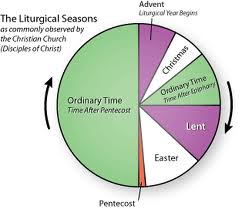
If you are not a member of or never attended a liturgical church, you may not have heard of, much less observe this rich tradition of the Church calendar that has being practiced and passed down through the years. For instance, most Christians today celebrate holy days that are critical to the Christian faith: Christmas, Easter and Lent are often viewed as the most important and celebrated ones. There are also others of a minor importance such as Advent, Epiphany and Pentecost among others. According to the Church calendar, all of these holy days are not one day events. They all should be observed over a period of time and include a variety of mini celebrations in accordance to Biblical accounts and historical facts. My belief is that all of us, traditionalists as well as contemporaries, could richly benefit from even a small observance of the church calendar, and in the process, strengthen our spiritual lives.
Let me explain my position on these Church calendar days, which I believe are so underutilized. As I noted earlier, all of these holy days are not just individually significant days on the Church Calendar. For example, there are twelve days of Christmas; Easter, there are fifty days. You are probably saying by now, “What is your point?” Well, I am glad you asked! I am going to use Easter as an example to expound on my thoughts. Easter Sunday is the most well attended Church day of the year. Easter is the most important day of the year for believers because of what it represents for the faith: the resurrection of our Lord and Savior. But most of us only celebrate this important occurrence one day of the year, on Easter Sunday. Well, if it is this important, then why is it only celebrated on one day? Jesus continued His teachings and appearances on earth for some after His resurrection, and the Church calendar set aside fifty days as the continuation of Easter. We have a rich account of Jesus’ life and ministry during those forty days, but the events are little talked about. The observation of these days could help us to remain focused on the Risen Christ. Churches could do well to highlight and implement teachings on the resurrection and its purpose and meaning in the lives of Christians far beyond the rolling away of the stone from the entrance of tomb. Jesus taught us a lot during this period, but often times we fall away from these last teachings by Christ as recorded in the Gospels. During this post-resurrection, pre-ascension period Jesus confirmed His teachings, commissioned His disciples, but most importantly, He expressed His great love for us. Now, if we do the same with other holy days, such as Christmas, and go beyond December 25th, we would celebrate and observe all twelve days, culminating with the visit of Magi bearing gifts for the new born King. Pentecost…we would celebrate and commemorate the Holy Spirit’s empowerment of the disciples during their gathering in the upper room and their subsequent work to spread the Gospel and plant churches throughout Asia Minor.
It is well known that we humans need structure to stay focused on even mundane tasks. Because of this, we implement and maintain time schedules in many areas of our lives, especially those areas that are of the most importance to us such as: career, school, as well as other social events. Structure for Christians is also important in keeping true to the faith. Churches could structure their teachings to fit the seasons. This can be done in different ways, such as in sermons, home groups, Sunday school, and other ministry programs. The early Church fathers understood the fact that a guideline is important to keep the focus on Christ, learn more about Him, and help to prevent the unavoidable, “I will wait till Christmas and Easter to attend church because nothing really happens at church between these two Special Days, Christmas and Easter anyway, and attending is boring and a waste of time. Now implement the celebration of these extended periods for other Holy days such as the twelve days of Christmas and the weeks after Pentecost, as well as others, as church leaders see fit for their particular Church, and give the congregants a structure to look forward to so they can stay focused on Christ.
One of the reason most Protestant churches avoid using the Church calendar is because of its liturgical inclination and connection to the Roman Catholic Church. As a matter of fact, it is more commonly known as the Liturgical calendar. Most Protestant churches try to distant themselves from any sort of worship that resembles that of the Roman Catholic Church. While there are legitimate reasons for such a stance, there are also some areas of Catholic worship that will do well to serve the Kingdom of God and be a guide for His people. If you research the history of the Church calendar, it started in the fourth century when the Roman Catholics were the only recognized Christian body in world. However, the Catholic establishment used its influence to abuse the people and implemented standards that were meant to elevate the leadership to a status of royalty and the false claim of infallibility. The result of this was the rise of the Great Reformation period that challenged the Catholics on many of their doctrines, affirming Christ as the center of our faith and the only Absolute to salvation. This led to most post-reformation churches removing everything that had any association with the Roman Catholic Church and was not a requirement for salvation or was not a Biblical instruction for a Christ-centered living.
The Reformation was a very necessary event that steered the Church back on the right course and its true purpose as God willed. However, there are times when we are cleaning house, and as one would say, we inadvertently throw out the baby with the bath water.
Proverbs 22:28
Remove not the ancient landmark, which thy fathers have set.
The Church calendar is one of those guides that I believe could be a wonderful tool for good Christian living. But, I will profess this with a warning. Under no circumstances, should any of the Church calendar dates be set as a “must observe” or be seen as a way for salvation. The Church calendar is only a guide. If you elevate its importance to any higher level, then you might be in danger of using it to place unnecessary burdens on believers, while at the same time, further distancing non-believers .
Colossians 2:16-17 NIV
Therefore do not let anyone judge you by what you eat or drink, or with regard to a religious festival, a New Moon celebration or a Sabbath day. These are a shadow of the things that were to come; the reality, however, is found in Christ.
Again, the Liturgical Calendar is a tool for worship guidance and must never viewed as a vehicle for salvation. Furthermore, not everything on the Liturgical Church calendar should be readily accepted as Biblically sound; each celebration should be examined carefully so we get a full understanding of its origin and purpose.
Let us strive to come into the presence of God with fullness and reverence. Let us seek ways to enter into true worship, infusing our rich traditions with our contemporary styles, as we offer ourselves as living sacrifices, holy and acceptable to the One true God.
Therefore, I urge you, brothers and sisters, in view of God’s mercy, to offer your bodies as a living sacrifice, holy and pleasing to God—this is your true and proper worship. Romans 12:1 NIV
 The Branch Life
Leave a comment